By TrendPulsee Staff | Published February 24, 2026 | Updated February 24, 2026
TL;DR: Quick Summary
- Next-gen EV batteries like solid-state and silicon-anode are poised to redefine electric vehicle performance.
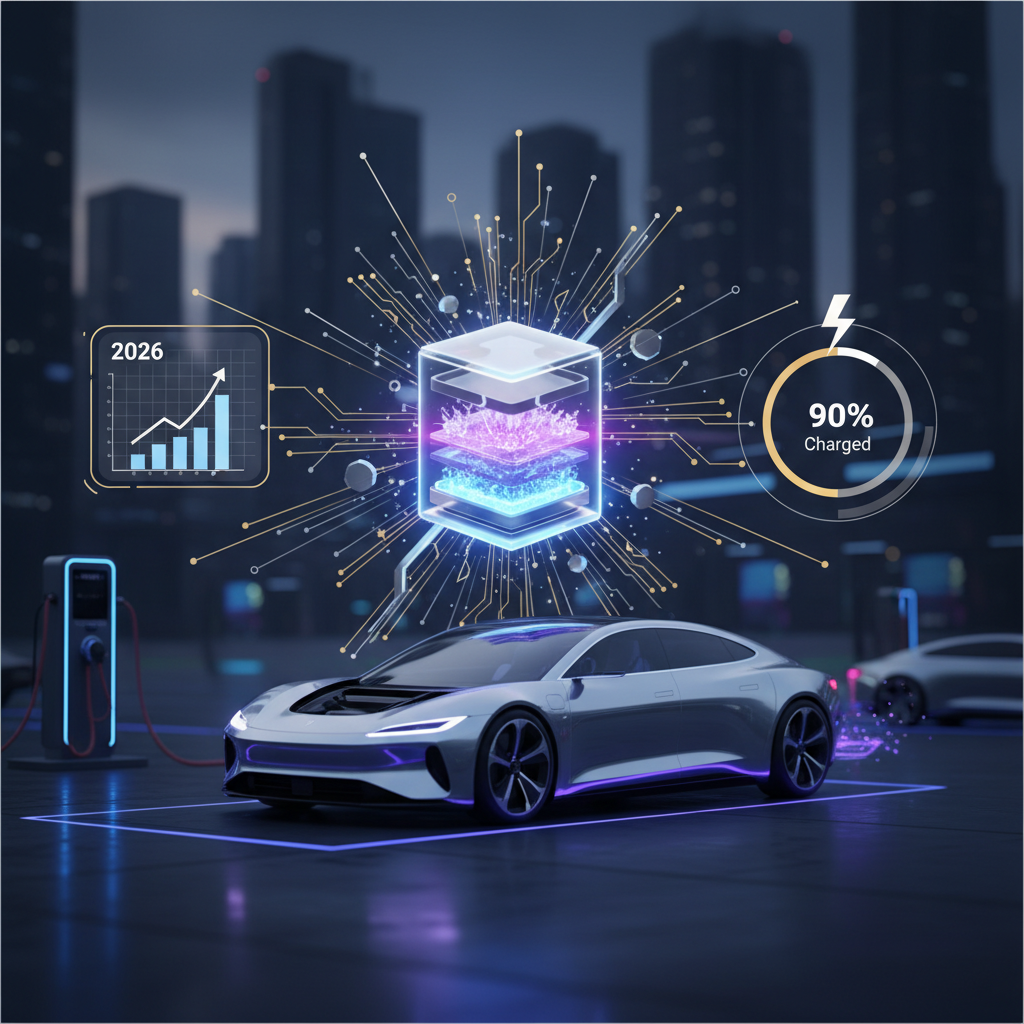
- Expect significantly longer range (up to 1,000 miles) and ultra-fast charging (10-80% in under 10 minutes).
- Key players like QuantumScape, StoreDot, CATL, and Solid Power are leading the innovation charge.
- Mass adoption hinges on overcoming cost, manufacturing scalability, and thermal management challenges.
The Game-Changing Race for Next-Gen EV Batteries in 2026
The electric vehicle (EV) revolution is accelerating, but a persistent question lingers for many prospective buyers: range anxiety and charging times. While current lithium-ion batteries have made incredible strides, the true inflection point for mass EV adoption hinges on the next wave of energy storage technology. Today, in early 2026, we stand on the precipice of a monumental shift, with next-gen EV batteries promising to shatter existing limitations and redefine what's possible for electric cars.
These aren't incremental improvements; we're talking about fundamental changes to battery chemistry and architecture that will deliver unprecedented performance. Our analysis suggests that by the end of 2026 and into 2027, several of these advanced battery technologies will begin to move from pilot lines to significant production, impacting everything from vehicle design to charging infrastructure. Read more: EV charging at home [blocked]
What Are the Next-Gen EV Batteries Poised to Revolutionize the Market?
Next-gen EV batteries encompass a range of advanced chemistries and architectures designed to surpass the energy density, charging speed, safety, and lifespan of conventional lithium-ion cells. The primary contenders include solid-state batteries, silicon-anode batteries, and various lithium-metal or lithium-sulfur variants. These innovations aim to address the core limitations of current technology, such as the use of liquid electrolytes and graphite anodes, which restrict energy storage and charging rates.
These new EV battery technology innovations are not just about more range; they're about a holistic improvement that makes electric vehicles more practical, safer, and ultimately, more appealing to a broader audience. The shift away from traditional liquid electrolytes, for instance, promises a significant leap in safety by reducing the risk of thermal runaway.
How Do Solid-State Batteries Improve EV Range and Safety?
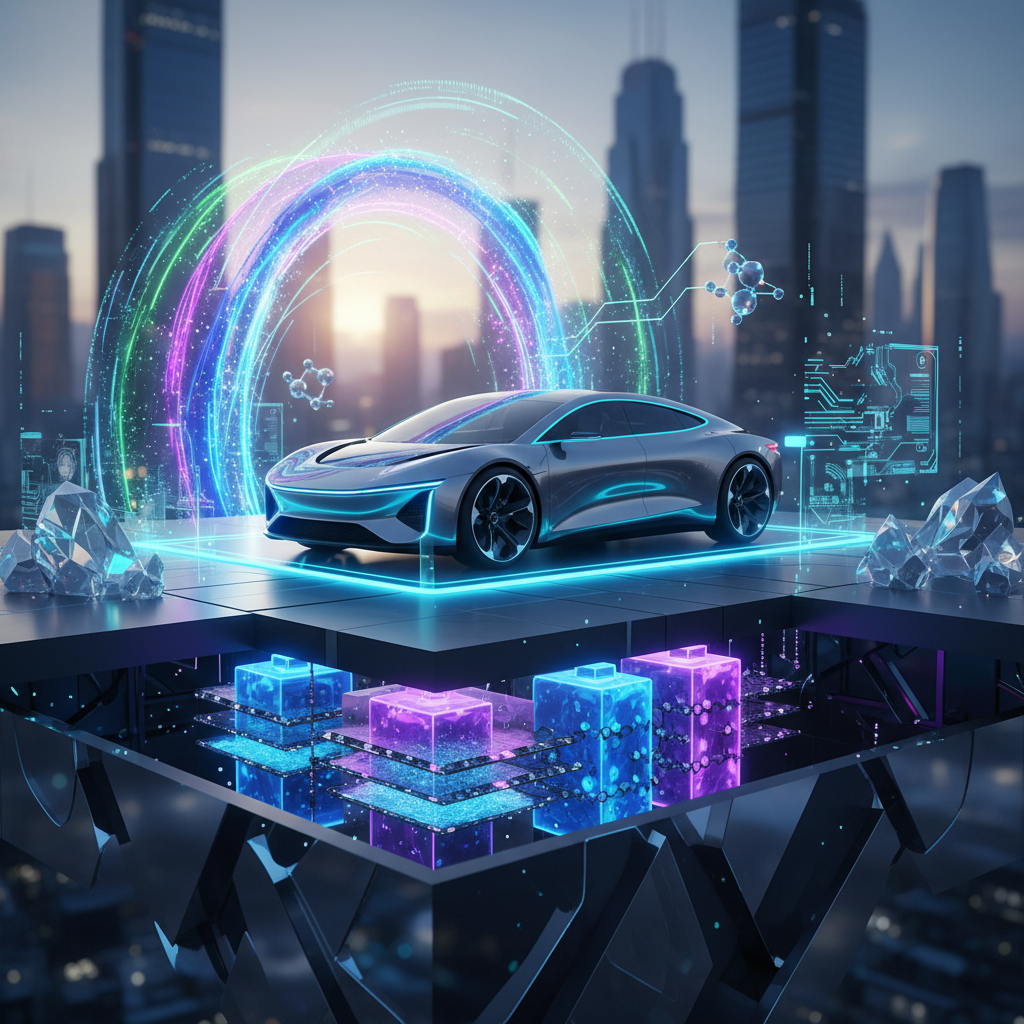
Solid-state batteries are widely considered the holy grail of electric car battery innovation due to their potential for dramatically improved performance and safety. Unlike traditional lithium-ion batteries that use a liquid electrolyte, solid-state batteries employ a solid material – typically a ceramic, polymer, or sulfide – to conduct ions between the anode and cathode. This fundamental change unlocks several critical advantages.
Improved Energy Density: The solid electrolyte allows for the use of a lithium-metal anode, which has a significantly higher theoretical energy density compared to the graphite anodes used in current lithium-ion batteries. This means more energy can be packed into a smaller, lighter battery pack, directly translating to longer range electric vehicles. Experts predict solid-state batteries could offer an energy density of 500 Wh/kg or more, compared to the 250-300 Wh/kg typical of today's best lithium-ion cells. This could enable EVs with ranges exceeding 600-800 miles (965-1287 km) on a single charge, effectively eliminating range anxiety for most drivers.
Enhanced Safety: The absence of a flammable liquid electrolyte drastically reduces the risk of thermal runaway and fire, a major safety concern for current EV batteries. Solid-state batteries are inherently more stable, making them safer in collisions and less prone to overheating during aggressive charging or discharging cycles. This safety improvement is a major selling point for consumers and regulators alike.
Faster Charging: While often associated with energy density, solid-state designs also hold promise for fast charging EV technology. The solid electrolyte can often withstand higher current densities without degrading, theoretically allowing for much quicker charging times. Companies like QuantumScape are targeting 0-80% charge in under 15 minutes, a speed that would rival refuelling a petrol car. This is a critical factor for widespread EV adoption.
Longer Lifespan: Early research suggests that solid-state batteries may also offer a longer cycle life due to reduced degradation mechanisms compared to liquid electrolyte systems. This means EV batteries could last for hundreds of thousands of miles, potentially outliving the vehicle itself.
What Companies Are Leading the Charge in Next-Gen EV Battery Development?
The race to commercialize new EV battery technology is fierce, with established giants and innovative startups pouring billions into research and development. Here are some of the key players to watch:
Leading Solid-State Battery Developers:
- QuantumScape (US): Perhaps the most high-profile solid-state battery developer, backed by Volkswagen. QuantumScape is focused on a ceramic solid electrolyte and a lithium-metal anode. They have demonstrated promising lab results, including 800 cycles with over 90% capacity retention and ultra-fast charging (0-80% in 15 minutes). Their challenge remains scaling up production from coin cells to automotive-grade multi-layer cells. Volkswagen aims to integrate their batteries by 2027-2028.
- Solid Power (US): Partnered with Ford and BMW, Solid Power is developing sulfide-based solid-state batteries. They have successfully produced 100 Ah (amp-hour) multi-layer cells and are targeting commercialization by 2028. Their technology is designed to be compatible with existing lithium-ion manufacturing processes, potentially easing the transition to mass production.
- Toyota (Japan): A long-time leader in battery research, Toyota holds numerous patents in solid-state technology. They've been more cautious with public announcements but have indicated plans for a solid-state EV by 2027-2028, initially for hybrid vehicles before full EVs. Their approach reportedly involves sulfide-based electrolytes.
- CATL (China): The world's largest EV battery manufacturer, CATL is not resting on its laurels. While known for its LFP and NMC batteries, CATL has also announced plans for solid-state battery development, aiming for mass production around 2030. Their sheer manufacturing scale makes them a formidable contender.
Innovators in Silicon-Anode and Other Advanced Chemistries:
- StoreDot (Israel): Specializing in fast charging EV technology, StoreDot is developing silicon-dominant anodes that allow for extreme fast charging (XFC). They've demonstrated charging an EV battery from 10-80% in just 10 minutes and are targeting 5-minute charging by 2028. Their technology is designed to be a drop-in solution for existing lithium-ion battery manufacturing lines, making it highly scalable. Mercedes-Benz and VinFast are among their investors.
- Sila Nanotechnologies (US): Sila is focused on replacing graphite in anodes with silicon, significantly boosting energy density. Their silicon-anode material is already being used in the Whoop 4.0 fitness tracker and is slated for automotive integration with Mercedes-Benz by 2025-2026. They claim a 20-40% increase in energy density over conventional lithium-ion batteries.
- Northvolt (Sweden): While primarily known for its gigafactories producing conventional lithium-ion batteries, Northvolt is also investing heavily in sustainable battery materials and advanced chemistries, including lithium-metal and solid-state research. Their focus on localized, green battery production positions them uniquely.
When Will Next-Gen EV Batteries Be Available, and What Are the Challenges?
The timeline for widespread adoption of next-gen EV batteries is a critical question for both consumers and investors. While prototypes and small-scale production are already underway, mass market availability is still a few years out for most technologies.
Availability Timeline:
- 2025-2027: Expect to see silicon-anode batteries from companies like Sila Nanotechnologies and StoreDot begin to appear in niche or premium EV models, offering initial boosts in energy density and charging speed. These are often seen as an evolutionary step before full solid-state.
- 2027-2030: This is the projected window for the first mass-produced solid-state battery EVs from players like Toyota, QuantumScape (via Volkswagen), and Solid Power (via Ford/BMW). Initial volumes will likely be limited and target higher-end vehicles.
- Post-2030: Widespread adoption across various price points and vehicle segments, assuming manufacturing scales successfully and costs come down.
Challenges for Next-Gen EV Batteries:
- Manufacturing Scalability: This is arguably the biggest hurdle. Producing solid-state batteries at the gigafactory scale required for the automotive industry is incredibly complex. The precision needed for thin, defect-free solid electrolyte layers, and the handling of highly reactive lithium metal, present significant engineering and cost challenges. Current processes are often slow and expensive.
- Cost Reduction: While promising better performance, initial electric car battery innovation will likely come at a premium. For widespread adoption, the cost per kilowatt-hour (kWh) must be competitive with, or even lower than, current lithium-ion technology. Achieving this will require economies of scale and breakthroughs in material science and manufacturing efficiency.
- Thermal Management: Even solid-state batteries generate heat during charging and discharging. Designing effective thermal management systems for these new chemistries, especially with ultra-fast charging, is crucial to ensure safety and longevity.
- Dendrite Formation: For lithium-metal anodes, preventing lithium dendrite growth (tree-like structures that can pierce the electrolyte and cause short circuits) remains a significant challenge, though solid electrolytes are designed to mitigate this.
- Interface Resistance: Ensuring good contact and low resistance between the solid electrolyte and electrodes is vital for efficient ion flow and performance. This is an area of intense research.
How Will Next-Gen Batteries Impact EV Adoption and the Market?
The arrival of next-gen EV batteries will be a watershed moment for the electric vehicle industry, accelerating adoption rates and profoundly reshaping the automotive landscape. Our analysis suggests several key impacts:
- Elimination of Range Anxiety: With vehicles offering 600-1000 miles (965-1609 km) of range, the psychological barrier of range anxiety will largely disappear. Drivers will be able to undertake long journeys with confidence, similar to petrol cars, and potentially only need to charge once or twice a week for daily commuting.
- Ultra-Fast Charging as the Norm: The ability to add hundreds of miles of range in 10-15 minutes will make EV ownership far more convenient. This will reduce reliance on home charging for all trips and make public charging stops much quicker, easing pressure on charging infrastructure by increasing throughput. Related: Autonomous Driving Technology [blocked]
- Reduced Battery Size and Weight: Higher energy density means smaller, lighter battery packs for the same range, or significantly more range for the same size. This will improve vehicle dynamics, efficiency, and potentially allow for more flexible interior designs. Lighter vehicles also require less energy to move, creating a virtuous cycle of efficiency.
- Lower Total Cost of Ownership (TCO): As manufacturing scales and costs decline, and with longer battery lifespans, the TCO for EVs will become even more compelling. This, combined with potential government incentives Read more: Electric Car Subsidies 2026 [blocked], will make EVs an undeniable economic choice.
- New Vehicle Segments: Longer range and faster charging will enable new types of electric vehicles, such as long-haul electric trucks, electric aircraft, and more versatile recreational vehicles, previously limited by battery performance.
- Increased Competition and Innovation: The breakthroughs will intensify competition among automakers and battery manufacturers, driving further EV battery advancements and pushing the boundaries of what's possible.
- Environmental Impact: More efficient and longer-lasting batteries will further reduce the environmental footprint of EVs, from manufacturing (less material per kWh) to operation (less frequent replacement). This aligns perfectly with the broader goals of sustainable transportation.
Comparison: Current Li-ion vs. Next-Gen Solid-State
| Feature | Current Lithium-ion (NMC/LFP) | Next-Gen Solid-State (Projected) | Impact on EV Adoption |
|---|---|---|---|
| Energy Density | 250-300 Wh/kg | 500+ Wh/kg | Doubles range for same battery size/weight |
| Charging Speed | 20-40 min (10-80%) | 10-15 min (10-80%) | Matches petrol refuelling times, eliminates wait anxiety |
| Safety | Flammable liquid electrolyte | Non-flammable solid electrolyte | Significantly safer, reduced fire risk |
| Cycle Life | 800-1,500 cycles | 2,000+ cycles | Battery outlives vehicle, better resale value |
| Operating Temp. | Narrower range | Wider range | Better performance in extreme climates |
| Cost (per kWh) | ~$80-100 | ~$100-150 (initial), then ↓ | Initial premium, then cost parity/advantage |
| Thermal Mgmt. | Complex liquid cooling | Simpler, more robust | Lighter, less complex battery packs |
Frequently Asked Questions (FAQs)
Are next-gen EV batteries truly safe?
Yes, one of the primary advantages of many next-gen EV batteries, particularly solid-state designs, is enhanced safety. By replacing flammable liquid electrolytes with solid materials, the risk of thermal runaway and fire is significantly reduced, making them inherently safer than current lithium-ion batteries.
Will next-gen batteries make EVs cheaper?
Initially, next-gen EV batteries may command a premium due to high R&D costs and early-stage manufacturing. However, as production scales and technology matures, the increased energy density will mean less material is needed for a given range, potentially leading to lower costs per kWh and ultimately making EVs more affordable in the long run.
Can I upgrade my current EV with a next-gen battery?
Generally, no. EV battery packs are highly integrated components designed specifically for a vehicle's architecture, thermal management, and power electronics. Upgrading an existing EV with a new generation battery would be akin to replacing an entire powertrain and chassis, making it impractical and cost-prohibitive.
Key Takeaways
- Revolutionary Potential: Next-gen EV batteries are set to transform electric vehicles with unparalleled range, charging speed, and safety.
- Solid-State Leads the Pack: Solid-state technology, with its lithium-metal anode and solid electrolyte, is the frontrunner for ultimate performance.
- Silicon-Anode as Bridge: Silicon-anode advancements offer significant improvements in the near term, bridging the gap to mass solid-state production.
- Major Players Invested: Global automotive giants and battery manufacturers are heavily invested, indicating strong confidence in these technologies.
- Challenges Remain: Scaling manufacturing, reducing costs, and perfecting thermal management are critical hurdles to widespread adoption.
- Impact on Adoption: These advancements will virtually eliminate range anxiety and charging inconvenience, making EVs the default choice for many.
What This Means For You
For the average consumer, the advent of next-gen EV batteries means that the compromises often associated with electric vehicles are rapidly diminishing. If you've been on the fence about going electric due to concerns about range or charging times, the next 2-5 years will bring solutions that directly address these issues. You can anticipate a future where an electric car can travel further on a single charge than most petrol cars, and recharge in the time it takes to grab a coffee. For investors, this is a sector ripe with opportunity, but also with significant competition and technological risk. Understanding the nuances of each company's approach is key.
Bottom Line: A New Era of Electric Mobility
The narrative around electric vehicles is shifting from
Key Takeaways
- •This article covers the most important insights and trends discussed above
Sources & References
- QuantumScape achieves key performance milestone for solid-state battery technology
- Solid Power Announces Production of 100 Ah All-Solid-State EV Cells
- StoreDot reveals 100-mile-in-5-minutes extreme fast charging battery for EVs
- Sila Nanotechnologies Announces Breakthrough in Battery Technology for Mercedes-Benz G-Class EV
- Toyota to launch solid-state battery EV in 2027-2028
TrendPulsee
Tech journalist and content creator