TL;DR
- Indian Fintech is experiencing explosive growth, projected to reach $1 trillion by 2030, driven by UPI and digital innovation.
- UPI India has democratized digital payments, processing over 130 billion transactions in 2023, making it a global benchmark.
- Digital lending India is booming, addressing credit gaps for MSMEs and individuals through AI-driven platforms.
- Regulatory support, a young demographic, and a robust tech infrastructure are fueling fintech innovation India.
- The future of fintech India involves embedded finance, Web3 integration, and continued financial inclusion.
Indian Fintech: Revolutionary Growth & 5 Key Trends for 2026
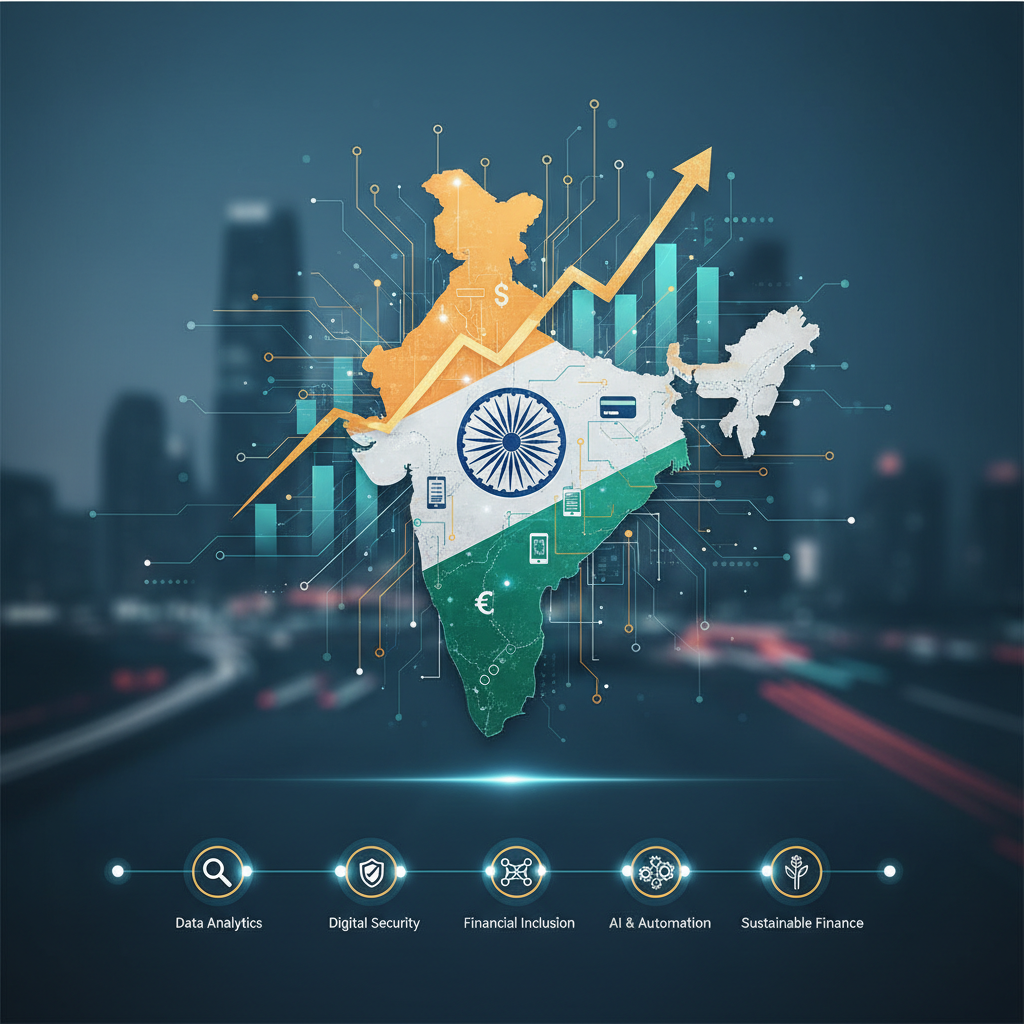
India's financial landscape is undergoing a seismic transformation, spearheaded by its vibrant and rapidly expanding Indian Fintech sector. What was once a nascent industry is now a global powerhouse, attracting unprecedented investment and redefining how millions access financial services. As we stand in February 2026, the sector isn't just growing; it's evolving at a breathtaking pace, driven by a unique confluence of technological prowess, supportive regulatory frameworks, and an insatiable demand for accessible financial solutions. Our analysis suggests that the Indian Fintech market is on track to reach a staggering $1 trillion valuation by 2030, a testament to its profound impact.
This isn't merely about digital payments; it's about a complete overhaul of the financial ecosystem, from lending to wealth management, insurance, and beyond. The sheer scale and speed of this transformation are unparalleled, making India a global case study for financial innovation and inclusion. Related: The Rise of India's Startup Ecosystem [blocked]
What Makes the Indian Fintech Sector So Dynamic in 2026?
The Indian Fintech sector's dynamism stems from several foundational pillars. Firstly, a massive, digitally-savvy population, with over 800 million internet users, provides a fertile ground for digital adoption. Secondly, the government's proactive stance, particularly through initiatives like the India Stack (Aadhaar, UPI, DigiLocker, etc.), has created a public digital infrastructure that is the envy of the world. Thirdly, a young, aspirational demographic is eager to embrace new financial tools that offer convenience, speed, and transparency, challenging traditional banking models.
Key Growth Drivers:
- Digital Public Infrastructure (DPI): The India Stack has provided a robust, open-source foundation for fintech innovation.
- Smartphone Penetration: Widespread access to affordable smartphones has democratized digital financial services.
- Regulatory Sandbox: The Reserve Bank of India (RBI) has fostered an environment for experimentation, allowing new solutions to be tested safely.
- Financial Inclusion Mandate: Fintech is bridging the gap for the unbanked and underbanked, bringing millions into the formal financial system.
- Venture Capital Influx: Global and domestic investors are pouring billions into promising Indian fintech startups.
How Does UPI India Work, and Why Is It a Global Benchmark?
UPI India (Unified Payments Interface) is a real-time payment system developed by the National Payments Corporation of India (NPCI) that facilitates instant inter-bank peer-to-peer (P2P) and person-to-merchant (P2M) transactions. It works by allowing users to link multiple bank accounts to a single mobile application, enabling instant money transfers using a unique Virtual Payment Address (VPA) or QR codes, without needing to share bank account details. This interoperability and ease of use have made it a phenomenal success.
UPI's brilliance lies in its simplicity, interoperability, and zero-transaction-fee model for users. In 2023, UPI processed an astonishing 130 billion transactions, valued at over ₹200 trillion (approx. $2.4 trillion), cementing its position as the world's most successful real-time payment system. Its impact extends beyond mere convenience; it has been instrumental in driving Indian digital payments adoption across all strata of society, from street vendors to large corporations. The success of UPI has even prompted other countries to explore similar models, with nations like Singapore and France integrating with India's UPI system. Read more: RBI's Role in Shaping India's Digital Economy [blocked]
Comparison: UPI vs. Traditional Payment Methods
| Feature | UPI India | Traditional Bank Transfer (NEFT/RTGS) | Credit/Debit Card (POS) |
|---|---|---|---|
| Transaction Speed | Instant (24/7) | Hours to next business day | Instant (subject to network) |
| Cost to User | Zero | Often nominal fees | Merchant fees, sometimes annual card fees |
| Ease of Use | Mobile app, VPA/QR code, simple PIN | Bank portal, account details, OTP | Physical card, PIN/signature |
| Interoperability | Across all participating banks/apps | Limited to bank's network | Global acceptance, but requires card |
| Reach | Deep penetration, even in rural areas | Primarily urban/semi-urban | Requires POS terminal, less rural reach |
| Security | Encrypted, VPA anonymizes account | Standard bank security | EMV chip, PIN, fraud detection |
The Surge of Digital Lending India: Bridging the Credit Gap
One of the most significant fintech trends India is the explosive growth of digital lending India. Traditional banking in India often struggles to serve the vast population of micro, small, and medium enterprises (MSMEs) and individuals in tier-2 and tier-3 cities due to stringent collateral requirements and lengthy processes. Digital lending platforms are stepping in to fill this critical credit gap, leveraging data analytics, AI, and machine learning to assess creditworthiness more efficiently and disburse loans rapidly.
Companies like Lendingkart, KreditBee, and EarlySalary have revolutionized access to credit, offering everything from small personal loans to working capital for businesses. "The ability to analyze alternative data points – from utility bill payments to e-commerce transaction history – allows us to build a far more accurate risk profile than traditional methods," says Anu Singh, CEO of FinConnect Solutions, a leading digital lender. "This is not just about convenience; it's about empowering millions to access capital they previously couldn't, fueling economic growth at the grassroots level." The digital lending market in India is projected to grow at a CAGR of over 25% through 2028, demonstrating its immense potential.
What are the Latest Indian Fintech Trends Shaping 2026 and Beyond?
The future of fintech India is being shaped by several cutting-edge trends that promise to further revolutionize financial services:
- Embedded Finance: This involves integrating financial services directly into non-financial platforms. Imagine ordering groceries and simultaneously accessing micro-credit for your purchase, or buying insurance directly from your e-commerce platform. Companies like Razorpay and PayU are at the forefront, enabling businesses to offer seamless financial products within their own ecosystems.
- Web3 and Blockchain Integration: While still in its early stages, blockchain India is gaining traction. We anticipate increased exploration of decentralized finance (DeFi) applications, tokenized assets, and blockchain-based payment solutions. The RBI's pilot of the Digital Rupee (e-Rupee) is a significant step in this direction, exploring the potential of Central Bank Digital Currencies (CBDCs) for both wholesale and retail use cases. This could fundamentally alter payment rails and asset ownership.
- AI and Hyper-Personalization: Artificial intelligence is moving beyond credit scoring. Fintechs are using AI to offer hyper-personalized financial advice, automated investment strategies, and predictive analytics for fraud detection. This allows for tailored products and services that cater to individual financial goals and risk appetites, moving away from a one-size-fits-all approach.
- SaaS Fintech and BaaS (Banking-as-a-Service): The rise of Software-as-a-Service (SaaS) models within fintech is enabling faster innovation. Banking-as-a-Service platforms allow non-bank entities to offer banking products by leveraging licensed banks' infrastructure, reducing time-to-market and regulatory hurdles for new fintech players. This fosters a collaborative ecosystem rather than purely competitive.
- Sustainable and Green Finance: With increasing environmental awareness, fintechs are developing solutions for green investments, carbon footprint tracking, and impact investing. This trend aligns with India's broader sustainability goals and offers new avenues for ethical financial products.
FAQs: Demystifying Indian Fintech
H3: What are the benefits of Indian fintech for the average citizen?
Indian Fintech offers numerous benefits, including enhanced financial inclusion by providing access to banking, credit, and investment services to previously underserved populations. It brings unparalleled convenience through instant digital payments (UPI), faster loan approvals, and personalized financial management tools, all accessible via a smartphone. Furthermore, it fosters transparency and often reduces transaction costs compared to traditional methods.
H3: Who are the key players in Indian fintech?
The Indian Fintech landscape is diverse. Key players include established payment giants like Paytm, PhonePe, and Google Pay (via UPI); digital lenders such as Lendingkart, KreditBee, and Navi Technologies; investment platforms like Groww and Zerodha; and infrastructure providers like Razorpay and Pine Labs. Traditional banks are also actively collaborating with or launching their own fintech arms to stay competitive.
H3: How is technology changing Indian finance?
Technology is fundamentally transforming Indian finance by digitizing every aspect of financial transactions, from account opening (eKYC) to payments, lending, and wealth management. It's enabling greater efficiency, reducing operational costs, improving fraud detection through AI, and facilitating real-time data analysis. This shift is leading to a more customer-centric, accessible, and inclusive financial system for the entire nation.
Key Takeaways
- Indian Fintech is a global leader in digital innovation, particularly driven by the success of UPI.
- The sector is projected for exponential growth, reaching a $1 trillion valuation by 2030.
- Digital lending India is crucial for financial inclusion, leveraging AI to serve MSMEs and individuals.
- Fintech trends India point towards embedded finance, Web3 integration, and hyper-personalization.
- A strong regulatory framework and public digital infrastructure (India Stack) are critical enablers.
What This Means For You
For consumers, the rise of Indian Fintech translates into unparalleled convenience, greater access to financial products, and more personalized services. Whether it's instant payments, quick loans, or smart investment advice, your financial life is becoming simpler and more efficient. For businesses, it means new avenues for growth through embedded finance, easier access to capital, and streamlined payment processes. For investors, the sector presents a high-growth opportunity with strong fundamentals and a clear path to expansion, making it an attractive destination for capital. Related: Investing in India's Tech Boom [blocked]
Bottom Line
The Indian Fintech story is far from over; it's just hitting its stride. With continuous innovation, a supportive ecosystem, and a vast, eager market, India is not just adopting global fintech trends but actively setting them. The next few years promise even more groundbreaking developments, further solidifying India's position as a global fintech superpower. We at TrendPulsee will continue to monitor this exciting space, bringing you the latest insights from this dynamic market.
Key Takeaways
- •This article covers the most important insights and trends discussed above
Sources & References
TrendPulsee
Tech journalist and content creator