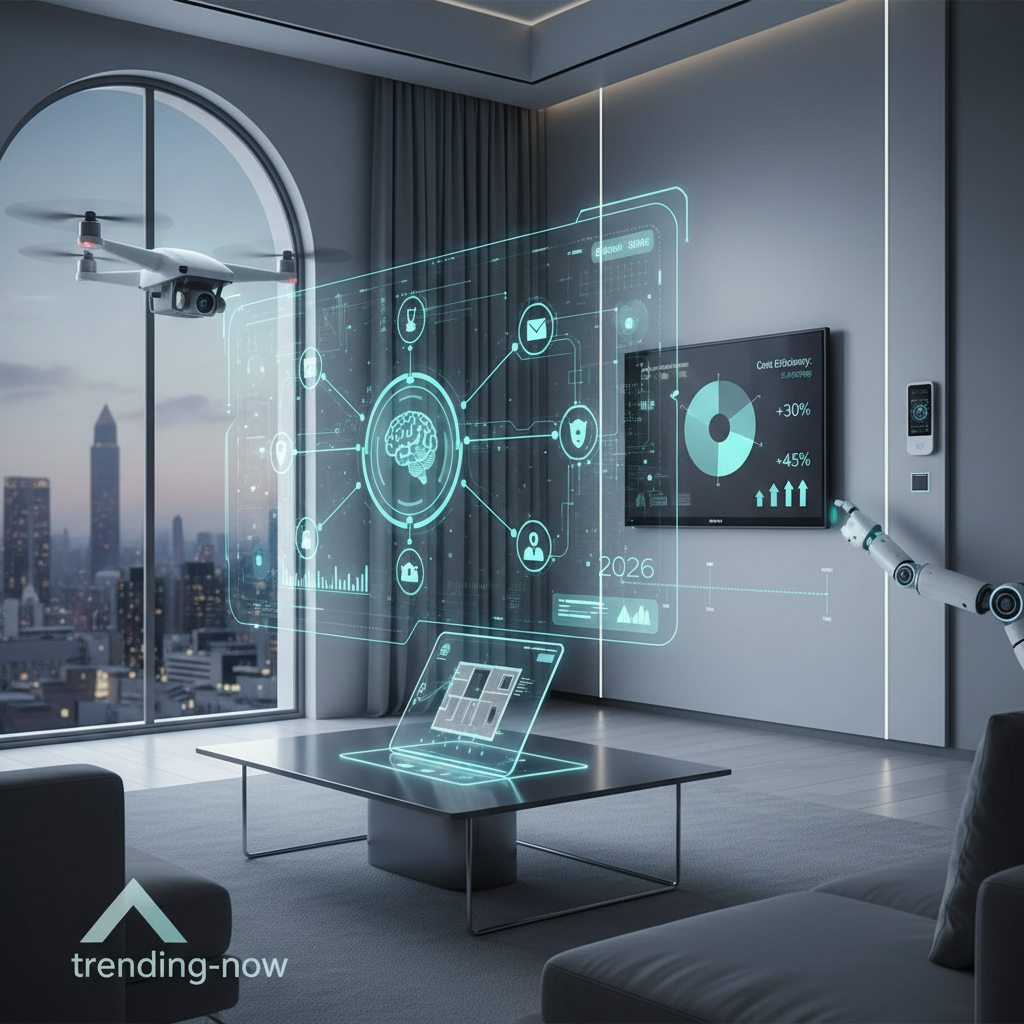
Ultimate AI Smart Home Guide: Breakthroughs & Costs in 2026
TL;DR: Quick Summary
- AI smart home technology is rapidly evolving beyond basic voice commands, offering predictive, personalized, and proactive capabilities.
- Benefits include enhanced convenience, significant energy savings, improved security, and a truly personalized living environment.
- Key innovations for 2026 focus on predictive maintenance, hyper-personalization, and advanced energy optimization through machine learning.
- Costs vary widely, from entry-level setups (₹20,000-₹50,000) to premium, fully integrated systems (₹2,00,000+), with ongoing subscription fees for advanced features.
Imagine a home that anticipates your needs before you even voice them, a living space that adjusts to your mood, optimizes energy consumption without your intervention, and even alerts you to potential appliance failures. This isn't science fiction anymore; it's the rapidly unfolding reality of the AI smart home. In 2026, the convergence of advanced artificial intelligence with everyday smart devices is transforming our residences into truly intelligent ecosystems. But what exactly does this mean for the average homeowner in India, and how much will it cost to embrace this futuristic lifestyle?
Our analysis suggests that the market for intelligent home systems is experiencing unprecedented growth. A recent report by Statista projects the smart home market in India to reach over US$6 billion by 2026, driven largely by the integration of sophisticated AI capabilities. This isn't just about turning lights on and off with your voice; it's about creating a truly responsive and intuitive living environment. Read more: The Rise of IoT Security in Connected Homes [blocked]
What is an AI Smart Home and How Does AI Enhance Smart Homes?
An AI smart home is a residence where devices and systems are interconnected and leverage artificial intelligence to learn, adapt, and automate tasks based on user behavior, environmental conditions, and predictive analytics. It moves beyond simple automation (like scheduling lights) to intelligent automation, where the home actively makes decisions and adjustments to optimize comfort, security, and efficiency.
AI significantly enhances smart homes by providing capabilities that go far beyond traditional smart home technology. While basic smart homes rely on pre-programmed rules or direct commands, AI introduces machine learning algorithms that analyze vast amounts of data—from your daily routines and energy usage patterns to external weather conditions and even your biometric data (with consent). This data allows the system to predict your needs, personalize experiences, and proactively manage your home. For example, an AI-powered thermostat learns your preferred temperatures at different times of the day and automatically adjusts, even pre-cooling before you arrive home on a hot day. This is the essence of AI in home automation.
Beyond Voice Commands: The True Power of AI in Your Home
While voice assistants like Amazon Alexa and Google Assistant are the most visible face of AI in our homes, their capabilities are just the tip of the iceberg. True artificial intelligence home systems delve much deeper:
- Predictive Maintenance: AI can monitor the performance of appliances like refrigerators, washing machines, or HVAC systems, detecting subtle anomalies that indicate potential failures before they occur. Imagine your smart home ordering a replacement part for your AC unit days before it breaks down, preventing discomfort during a heatwave.
- Hyper-Personalization: AI learns individual preferences for lighting, music, temperature, and even scent, creating unique profiles for each family member. As you move through the house, the environment adjusts seamlessly to your liking.
- Adaptive Security: Beyond motion sensors, AI-powered cameras can differentiate between family members, pets, and potential intruders. They can learn normal patterns of activity and flag unusual occurrences, reducing false alarms and enhancing peace of mind.
- Advanced Energy Optimization: AI analyzes energy consumption patterns, utility rates, and weather forecasts to make real-time decisions. It might shift energy-intensive tasks to off-peak hours or intelligently manage solar panel output and battery storage for maximum efficiency, significantly reducing electricity bills.
What are the Benefits of AI in Smart Home Technology?
Integrating AI into your smart home technology offers a multitude of tangible benefits, transforming daily life from mundane to magnificent. These advantages span convenience, security, energy efficiency, and overall quality of life.
- Unparalleled Convenience: Imagine waking up to blinds automatically opening, your coffee brewing, and the news briefing playing, all without lifting a finger. AI learns your morning routine and orchestrates it seamlessly. It can even manage grocery lists based on pantry inventory or order refills for household essentials.
- Significant Energy Savings: This is one of the most compelling benefits. AI's ability to precisely control heating, cooling, lighting, and appliance usage based on occupancy, weather, and energy tariffs can lead to substantial reductions in utility bills. Some studies suggest AI-driven energy management can cut energy consumption by up to 20-30% in residential settings. Read more: Sustainable Tech: Innovations for a Greener Future [blocked]
- Enhanced Security and Safety: AI-powered security systems offer sophisticated threat detection. Beyond identifying intruders, they can monitor for gas leaks, smoke, or even unusual sounds (like glass breaking) and alert emergency services automatically. Facial recognition and behavioral analysis add layers of protection.
- Personalized Comfort and Well-being: Your home becomes a sanctuary tailored to you. AI can adjust lighting to mimic natural circadian rhythms, play calming music when it detects stress, or even suggest air purification cycles based on air quality sensors. This contributes to a healthier and more comfortable living environment.
- Proactive Maintenance and Longevity: By monitoring appliance health, AI helps prevent costly breakdowns and extends the lifespan of your home systems, saving you money and hassle in the long run.
Is AI Smart Home Technology Safe? Addressing Data Privacy and Security Concerns
The question of safety and privacy is paramount when discussing any connected technology, especially an AI smart home that collects vast amounts of personal data. While the benefits are clear, it's crucial to address the inherent risks associated with data collection and cybersecurity.
Data Privacy: AI systems in homes learn from your habits, preferences, and even conversations. This data, if not properly secured, could be vulnerable to breaches or misuse. Leading manufacturers are increasingly implementing robust encryption, anonymization techniques, and clear data usage policies. Users must be diligent in understanding these policies and configuring privacy settings. Companies like Google and Apple are investing heavily in on-device AI processing to minimize data transfer to the cloud, enhancing privacy.
Cybersecurity: Every connected device represents a potential entry point for malicious actors. A compromised smart lock or camera could expose your home to unauthorized access. We, at TrendPulsee, emphasize the importance of:
- Strong, Unique Passwords: For all smart devices and your Wi-Fi network.
- Regular Software Updates: Manufacturers frequently release patches for security vulnerabilities.
- Secure Wi-Fi Network: Use WPA3 encryption and consider segmenting your smart devices onto a separate guest network.
- Reputable Brands: Opt for established brands with a proven track record in security and privacy.
- Two-Factor Authentication (2FA): Enable 2FA wherever possible for added account security.
According to cybersecurity expert Dr. Priya Sharma from IIT Delhi, "The onus is on both manufacturers to build secure-by-design products and on consumers to adopt best practices. As AI becomes more embedded, understanding data flows and consent mechanisms will be critical for a truly safe connected living experience." While no system is entirely impervious, responsible usage and choosing secure products can mitigate most risks.
How Much Does an AI Smart Home Cost? A Buyer's Guide for Early Adopters
The cost of setting up an AI smart home varies dramatically depending on the level of integration, the number of devices, and the desired features. It's not a one-size-fits-all investment, but rather a scalable journey.
Entry-Level AI Smart Home (₹20,000 - ₹50,000)
For those looking to dip their toes into intelligent home systems, an entry-level setup typically includes:
- Smart Speaker/Hub: Amazon Echo Dot or Google Nest Mini (₹3,000-₹5,000)
- Smart Lighting: A few smart bulbs or a smart switch for a couple of rooms (₹5,000-₹10,000)
- Smart Plugs: For controlling basic appliances (₹2,000-₹4,000 for a pack)
- Basic Security: A smart camera for a single room (₹5,000-₹10,000)
- Smart Thermostat: Basic model (₹8,000-₹15,000)
This setup provides basic voice control, scheduling, and remote access, offering a taste of smart home automation convenience.
Mid-Range AI Smart Home (₹50,000 - ₹1,50,000)
This tier offers more comprehensive coverage and advanced features:
- Central Hub: More powerful hub like Google Nest Hub Max or Samsung SmartThings Hub (₹15,000-₹25,000)
- Whole-Home Lighting: Smart switches/bulbs for most rooms, possibly with color control (₹20,000-₹40,000)
- Advanced Thermostat: Learning thermostat like Nest or Ecobee (₹15,000-₹25,000)
- Enhanced Security: Multiple smart cameras, video doorbell, smart lock (₹30,000-₹60,000)
- Smart Appliances: Entry-level smart AC, air purifier, or robot vacuum (₹20,000-₹40,000)
- Sensors: Motion, door/window, and environmental sensors (₹5,000-₹15,000)
This level allows for more sophisticated routines, better integration, and a more responsive environment.
Premium/Fully Integrated AI Smart Home (₹1,50,000 - ₹5,00,000+)
For the ultimate future of smart homes experience, a premium setup involves extensive integration and high-end devices:
- Professional Installation: Often recommended for complex systems (₹30,000-₹1,00,000+)
- Dedicated Smart Home Controller/Server: For robust local processing and reliability (₹50,000-₹1,50,000+)
- High-End Smart Appliances: Smart refrigerators, ovens, washing machines, and integrated home entertainment systems (₹1,00,000-₹3,00,000+)
- Advanced Environmental Control: Multi-zone HVAC, smart blinds/curtains, air quality monitoring, and purification systems (₹50,000-₹1,50,000+)
- Comprehensive Security: Integrated alarm system, advanced facial recognition cameras, perimeter sensors, and professional monitoring subscriptions (₹50,000-₹1,00,000+)
- Customization: Tailored lighting scenes, whole-home audio, and custom automation scripts.
Ongoing Costs: Many advanced features, especially for security monitoring, cloud storage for camera footage, or premium AI insights, come with monthly or annual subscription fees ranging from ₹500 to ₹3,000+ per month.
Comparison of Popular AI Smart Home Hubs (2026)
| Feature/Hub | Google Nest Hub Max | Amazon Echo Show 10 | Samsung SmartThings Hub | Apple HomePod (2nd Gen) |
|---|---|---|---|---|
| Primary AI | Google Assistant | Alexa | Bixby (limited), local AI | Siri |
| Display | 10-inch HD | 10.1-inch HD (rotating) | None (app-based) | None (audio-focused) |
| Connectivity | Wi-Fi, Bluetooth, Thread | Wi-Fi, Bluetooth, Zigbee, Thread | Wi-Fi, Bluetooth, Zigbee, Z-Wave, Thread | Wi-Fi, Bluetooth, Thread |
| Key Strengths | Video calls, YouTube, deep Google integration, facial recognition | Rotating screen, extensive skill library, robust smart home control | Broadest device compatibility, local processing, advanced automation | Seamless Apple ecosystem integration, high-fidelity audio, strong privacy |
| Price (approx.) | ₹22,000 | ₹25,000 | ₹8,000 | ₹33,000 |
| Best For | Google ecosystem users, visual assistance, family hub | Alexa users, entertainment, comprehensive device control | Tech enthusiasts, DIY automation, diverse device users | Apple users, premium audio, privacy-conscious |
Prices are approximate and subject to change.
Key Takeaways
- AI smart home systems are evolving from reactive to proactive, offering unprecedented levels of convenience and efficiency.
- The benefits extend beyond comfort to significant energy savings, enhanced security, and personalized well-being.
- While data privacy and cybersecurity are valid concerns, choosing reputable brands and implementing best practices can mitigate risks.
- Costs vary widely, making AI smart home technology accessible at different budget points, with premium options offering comprehensive integration.
- The market in India is booming, indicating a strong future for connected living solutions.
What This Means For You
For the average Indian consumer, the rise of the AI smart home means a future of unparalleled convenience and efficiency. You can expect your home to become a more intuitive and responsive environment, actively working to improve your comfort, security, and even your carbon footprint. Whether you're an early adopter eager to integrate every new gadget or a cautious homeowner looking for practical solutions, the advancements in AI in home automation promise a more connected and intelligent way of living. Start small, focus on your biggest pain points (like energy bills or security), and gradually build your intelligent home ecosystem.
Frequently Asked Questions (FAQ)
Q1: What is the primary difference between a smart home and an AI smart home?
A smart home primarily responds to direct commands or pre-set schedules. An AI smart home, however, uses artificial intelligence to learn your preferences, predict your needs, and make autonomous, intelligent decisions to optimize your environment without constant input, offering a much more personalized and proactive experience.
Q2: Can AI smart home systems really save me money on electricity bills?
Yes, absolutely. Intelligent home systems equipped with AI can significantly reduce energy consumption by optimizing heating, cooling, lighting, and appliance usage based on real-time data like occupancy, weather forecasts, and electricity tariffs. This can lead to substantial savings, often 15-30% on energy bills.
Q3: Are all smart home devices compatible with AI features?
Not all. While many smart devices can be integrated into an AI-powered hub, true AI capabilities (like predictive analytics or advanced learning) often require devices with specific sensors and processing power, or integration with a robust AI platform. Look for devices explicitly marketed as
Key Takeaways
- •This article covers the most important insights and trends discussed above
Sources & References
TrendPulsee
Tech journalist and content creator