By TrendPulsee Staff | Published February 25, 2026 | Updated February 25, 2026
Quick Summary:
- Level 2 EV Charging is Standard: Offers significantly faster charging than Level 1, making it ideal for daily use.
- Installation Costs Vary: Expect €1,000-€2,500 for a Level 2 charger and installation, with potential for government subsidies.
- Smart Charging is Key: Optimizes costs, integrates with renewables, and prepares for future V2G capabilities.
- Future-Proofing Matters: Consider V2G compatibility and grid integration when choosing your home EV charging solution.
The electric vehicle (EV) revolution is no longer a distant dream; it's our present reality. As of early 2026, Germany alone boasts over 1.5 million registered battery electric vehicles (BEVs), a figure projected to surge past 5 million by the end of the decade. This rapid adoption brings a crucial question to the forefront for every EV owner: How do I efficiently and affordably power my vehicle at home? The answer lies in understanding the evolving landscape of home EV charging.
Gone are the days when a slow trickle charge from a standard wall outlet was sufficient. Today's EVs demand more, and the market has responded with sophisticated, intelligent solutions that integrate seamlessly into our smart homes and energy ecosystems. Our analysis at TrendPulsee suggests that a robust and intelligent residential EV charging setup is not just a convenience; it's a financial imperative and a cornerstone of sustainable mobility.
What is the Best Home EV Charging Solution for 2026?
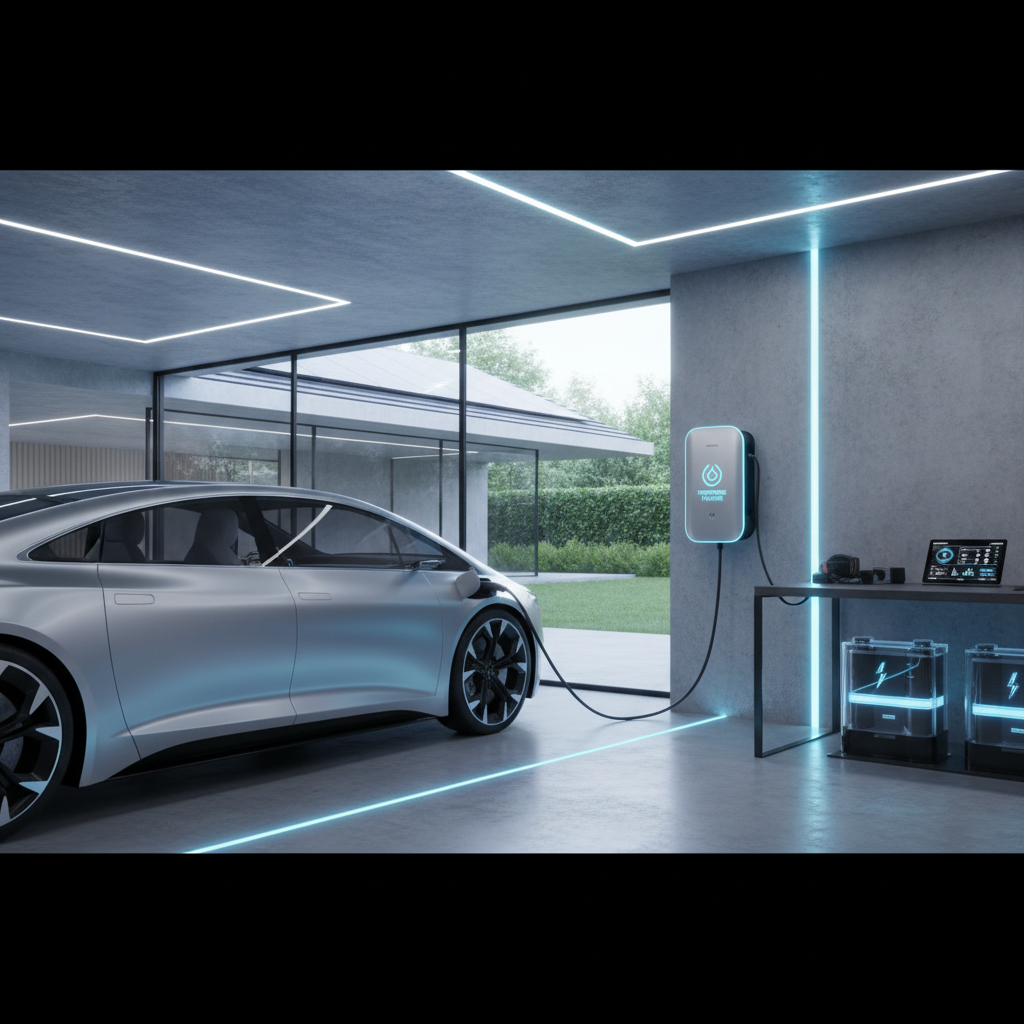
The best home EV charging solution is one that balances speed, cost-effectiveness, smart features, and future-proofing. For most EV owners, a Level 2 EV charger is the undisputed champion. Unlike Level 1 charging, which uses a standard 230V household outlet (Schuko plug in Germany) and typically adds only 8-12 km of range per hour, a Level 2 charger operates on a 400V circuit (three-phase power, common in German homes) and can deliver between 11 kW and 22 kW. This translates to adding 60-120 km of range per hour, meaning most EVs can be fully charged overnight or during a workday.
When selecting a best home EV charger, consider factors like charging speed (kW), cable length, weather resistance (if installed outdoors), and smart features. Leading brands like Wallbox, Easee, Zaptec, and ABL offer excellent options tailored for the German market, often with integrated energy management systems. For instance, the Wallbox Pulsar Plus is a popular choice due to its compact design, robust app control, and power-sharing capabilities, making it ideal for multi-EV households. Read more: Top Electric Car Reviews 2026 [blocked]
How Much Does it Cost to Install an EV Charger at Home in Germany?
The total cost to install an EV charging station home in Germany typically ranges from €1,000 to €2,500, encompassing both the hardware and professional electric car charger installation. This figure can fluctuate based on several variables:
- Charger Unit Cost: A quality Level 2 charger (wallbox) itself can cost anywhere from €400 to €1,200, depending on its features (e.g., smart capabilities, integrated meter, cable management).
- Installation Complexity: The primary cost driver is often the installation. If your electrical panel is conveniently located near the desired charging spot and has sufficient capacity, installation will be simpler and cheaper. However, if extensive trenching, long cable runs, or a panel upgrade is required, costs can quickly escalate.
- Electrical Panel Upgrade: Many older German homes might have an electrical panel (Sicherungskasten) that needs an upgrade to safely handle the increased load of a Level 2 charger, especially a 22 kW unit. This can add €500-€1,500 or more to the total cost.
- Local Electrician Rates: Labor costs vary by region. Always get multiple quotes from certified electricians specializing in EV installations.
Government Incentives: Germany has historically offered attractive subsidies for residential EV charging infrastructure. While the KfW 440 program (which offered €900 for smart wallboxes) has ended, federal states (Bundesländer) and municipalities often have their own ongoing programs. For example, some regions might offer grants for chargers combined with renewable energy systems like solar. It's crucial to check with your local energy agency (Energieagentur) or municipality for current incentives. These subsidies can significantly reduce your upfront investment, sometimes covering a substantial portion of the hardware and installation costs.
Do I Need a Special Electrical Panel for Home EV Charging?
Yes, in many cases, you might need an assessment or even an upgrade to your existing electrical panel to safely support home EV charging, especially for a Level 2 setup. Most German homes are equipped with a 400V three-phase connection, which is ideal for Level 2 charging. However, the available amperage on individual circuits and the overall capacity of your main service panel are critical.
- 11 kW Charger: An 11 kW Level 2 charger typically requires a 16 Ampere (A) three-phase circuit. Most modern homes can accommodate this without a major panel upgrade, provided there's sufficient spare capacity.
- 22 kW Charger: A 22 kW Level 2 charger demands a 32A three-phase circuit. This is where panel upgrades become more common, as not all existing installations have this much spare capacity. Overloading an electrical panel can lead to tripped breakers, damaged wiring, and even fire hazards.
Professional Assessment is Crucial: Before purchasing a charger, have a qualified electrician inspect your home's electrical system. They will assess your main service entrance, the capacity of your electrical panel, and the condition of your wiring. They can determine if your current setup can handle the additional load or if upgrades (e.g., a new circuit breaker, a sub-panel, or even a service upgrade from your utility) are necessary. This initial assessment is a small investment that prevents costly problems down the line.
The Power of Smart EV Charging: Optimizing Your Energy Use
Smart EV charging is more than just a convenience; it's a strategic tool for managing energy consumption and costs. These advanced chargers connect to your home's Wi-Fi, allowing you to control and monitor charging sessions via a smartphone app. But their capabilities extend far beyond simple remote control.
Key Benefits of Smart EV Charging:
- Time-of-Use (ToU) Optimization: In Germany, many electricity tariffs offer cheaper rates during off-peak hours (e.g., late at night). Smart chargers can be programmed to automatically charge your EV only when electricity is cheapest, saving you significant money over time. We've seen users reduce their charging costs by up to 30% through smart scheduling.
- Integration with Renewable Energy: If you have a rooftop solar PV system, a smart charger can prioritize charging your EV using surplus solar energy. This maximizes self-consumption, reduces your reliance on grid electricity, and further lowers your carbon footprint and energy bills. Companies like Fronius and SMA offer integrated solutions that seamlessly manage energy flow between solar, battery storage, and EV charging.
- Load Management: For homes with limited electrical capacity, smart chargers can dynamically adjust the charging power to prevent overloading the grid connection. This is particularly useful in multi-EV households or when other high-demand appliances are in use.
- Data and Insights: The companion apps provide detailed charging statistics, energy consumption reports, and cost breakdowns, giving you full transparency into your EV's energy usage.
- Future-Proofing for V2G (Vehicle-to-Grid): Many smart chargers are being designed with V2G capabilities in mind. While widespread V2G implementation is still emerging in Germany, it promises a future where your EV can not only draw power from the grid but also feed excess energy back, potentially earning you money or supporting grid stability. This is a game-changer for EV charging infrastructure.
Table: Level 2 Home EV Charger Comparison (2026 Estimates)
| Feature | Basic Smart Wallbox (e.g., ABL eMH1) | Advanced Smart Wallbox (e.g., Wallbox Pulsar Plus) | Premium Smart Wallbox (e.g., Easee Charge) |
|---|---|---|---|
| Power Output | 11 kW | 11 kW / 22 kW (configurable) | 11 kW / 22 kW (configurable) |
| Connectivity | Wi-Fi, Ethernet | Wi-Fi, Bluetooth | Wi-Fi, 4G LTE, Bluetooth |
| Smart Features | App control, basic scheduling | Advanced scheduling, power sharing, energy meter | Dynamic load balancing, V2G ready, RFID |
| Price (approx.) | €500 - €700 | €700 - €1,000 | €900 - €1,200 |
| Installation | Standard | Standard to slightly complex | Standard to slightly complex |
| V2G Ready | Limited | Emerging | Yes |
The Future of EV Charging Infrastructure: Beyond Your Home
While home EV charging remains the most convenient and cost-effective solution for daily use, the broader EV charging infrastructure is rapidly evolving. Public charging networks are expanding, with a growing emphasis on ultra-fast DC chargers (up to 350 kW) that can add hundreds of kilometers of range in minutes. In Germany, initiatives like the 'Deutschlandnetz' are pushing for comprehensive coverage, ensuring that charging anxiety becomes a relic of the past.
However, the real innovation lies in the integration of these disparate charging points into a cohesive, intelligent grid. Think of it as a smart grid for EVs. This involves:
- Load Balancing: Managing the demand on the electricity grid, especially during peak hours, to prevent overloads. Smart chargers at home and in public play a crucial role here.
- Renewable Energy Integration: Ensuring that a significant portion of the electricity used for charging comes from sustainable sources like wind and solar. This aligns with Germany's ambitious Energiewende goals.
- Vehicle-to-Grid (V2G) and Vehicle-to-Home (V2H): These technologies allow EVs to act as mobile battery storage units, feeding power back to the grid or your home during peak demand or outages. While still in pilot phases, V2G promises to transform EVs from mere consumers to active participants in the energy market. For example, a Nissan Leaf with V2G capability could power a typical German household for several days.
Key Takeaways
- •This article covers the most important insights and trends discussed above
Sources & References
TrendPulsee
Tech journalist and content creator